2026-10-10 ·
Attic Water Stains? How to Trace the Leak to Its Source
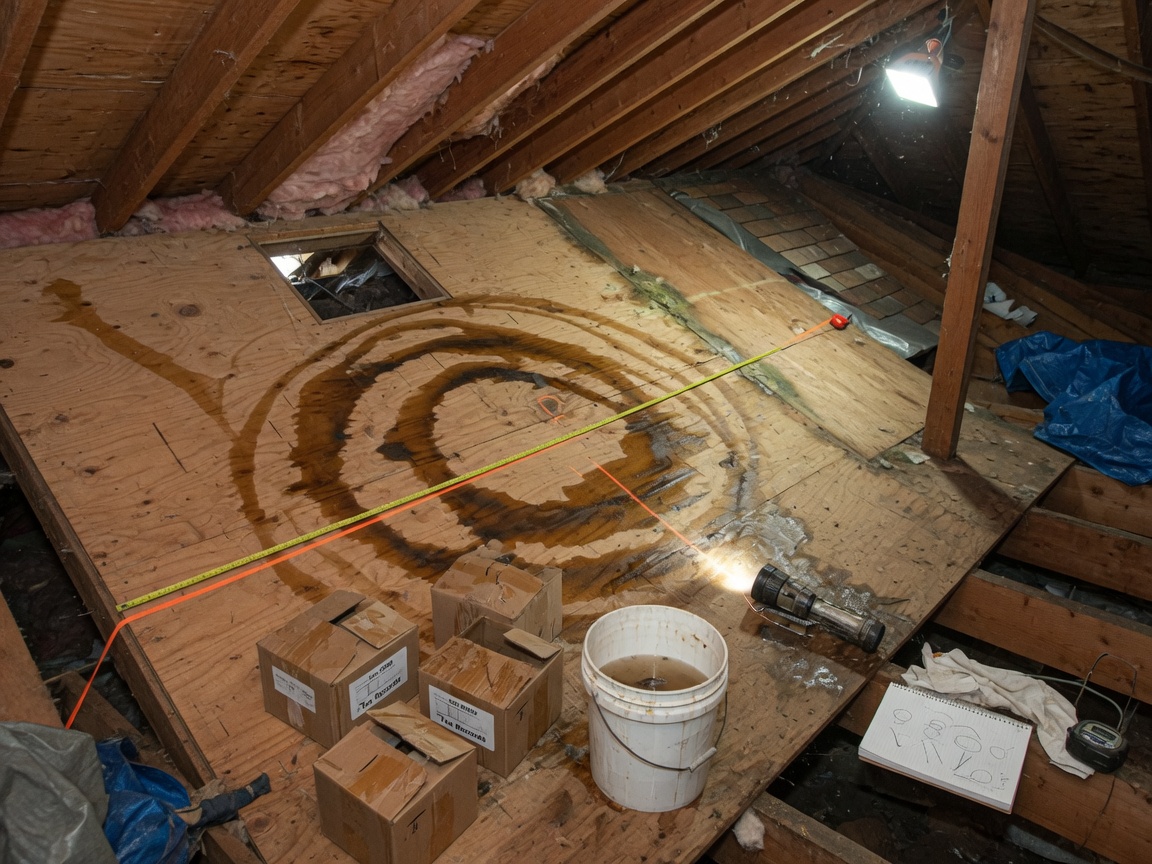
To trace attic water stains to the leak source, start directly above the mark on the roof deck during dry periods and follow any discoloration or soft spots outward 4–8 feet, since water often travels along rafters before dripping in Beaverton homes.
Inspecting the Attic Space
Begin your search on a clear day when attic temperatures allow safe entry. Use a bright flashlight to scan insulation and rafters for dark rings or mold around the stain. Mark the spot with tape, then move horizontally along the roof slope because gravity pulls water downslope in the mild wet winters that hit Washington County. Check for daylight coming through nail holes or gaps in older shingle layers typical of homes near Downtown Beaverton and Cedar Hills. Note any damp felt paper or displaced insulation that points toward the actual breach rather than the visible drip line. This inside-out approach prevents unnecessary roof cuts and reveals how prolonged rain saturates underlayment before showing on ceilings.
Mapping Water Travel in Local Conditions
Beaverton's dry summers followed by steady winter rains let small flashing failures go unnoticed until stains appear. Water often enters at valleys or near the Nike World Headquarters area homes where tree cover adds debris load. Trace upward from the stain along the rafter to the nearest ridge or sidewall, because runoff follows the steepest path before pooling. In homes built before 1990 around the Beaverton City Library vicinity, original felt underlayment breaks down faster under repeated saturation. Measure the horizontal distance from stain to suspected entry—usually 3–6 feet—to account for wind-driven rain common in the region. This mapping avoids mistaking a secondary drip for the primary breach.
Checking Flashing and Penetrations
Examine all roof penetrations within 10 feet of the stain, including vents and skylights, because these are frequent failure points after years of expansion cycles. Lift nearby shingles gently to inspect step flashing along walls or chimneys common in Washington County neighborhoods. Look for rust, sealant cracks, or lifted edges that allow water under the surface during extended wet periods. In Cedar Hills properties with mature landscaping, check where branches rub against edges and create entry routes. Document each location with photos before closing up the attic so any roof leak detection & inspection visit starts with clear reference points rather than guesswork.
When Stains Point to Gutter or Valley Issues
Stains directly below valleys or near eaves often trace back to clogged or mis-sloped gutters that force water under shingles during heavy winter flows. Follow the stain line to the nearest valley or eave and inspect for debris dams or separated seams. Homes in South Beaverton and near Hillsboro frequently see this pattern after leaf drop in fall. Review seasonal buildup patterns rather than assuming a shingle defect, since gutter overflow accounts for many interior marks in the area. See how gutter problems that cause roof leaks compound these issues in local conditions.
Knowing When Professional Tracing Is Needed
If the stain path leads to multiple possible entries or the attic access is limited, schedule emergency roof leak repair rather than continuing solo exploration. Technicians use moisture meters and infrared scans to confirm the source without removing large sections of decking. This approach protects the structure during the wet season when further rain could worsen damage in Beaverton attics. Keep records of your initial findings to speed up the on-site assessment and focus repairs on the actual breach location.