2026-10-10 ·
Moss on Your Roof Is Causing Leaks (Here's the Fix)
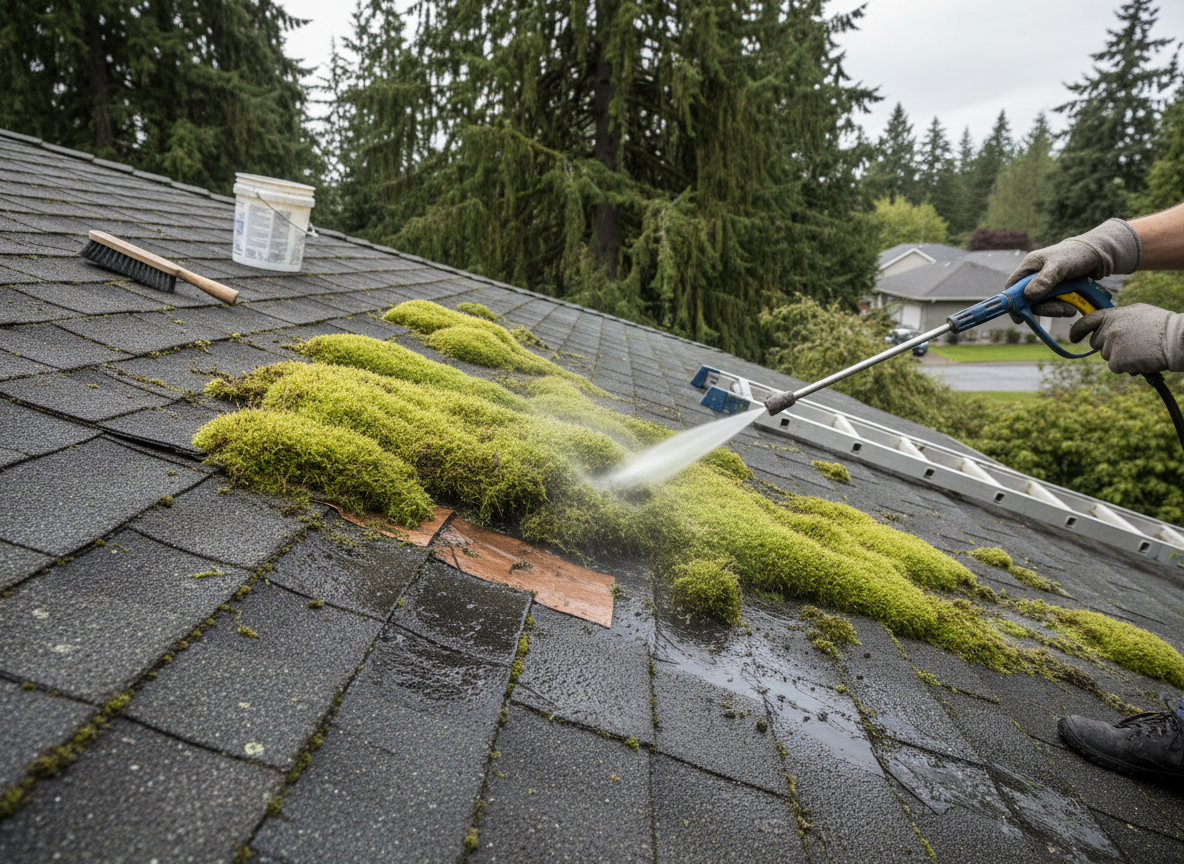
Moss on your roof causes leaks by holding moisture against shingles and lifting them during Beaverton's mild wet winters, and the fix starts with safe removal followed by zinc-based treatment that prevents regrowth for several seasons. Homes in Downtown Beaverton and Cedar Hills often see this issue on asphalt shingle roofs built 15 to 25 years ago, where shade from mature trees and constant winter drizzle create ideal growing conditions. Once moss mats form, they trap debris and keep the surface damp even in dry summers, allowing water to seep under shingles and reach the underlayment. In Washington County, this pattern repeats across neighborhoods near the Nike World Headquarters and Beaverton City Library, where older housing stock meets frequent rain. Addressing the moss early avoids larger repairs that can appear after heavy winter storms.
Why Moss Thrives on Beaverton Roofs
Beaverton's climate features mild wet winters that deliver steady rain from October through March, followed by dry summers that do little to dry out shaded roof sections. This cycle lets moss spores settle on north-facing slopes and under tree cover common in Downtown and Cedar Hills. The damp conditions keep the roof surface above 60 percent moisture for months, allowing moss to root into the shingle granules. Older homes near Portland and Hillsboro often lack the steeper pitches or metal flashings that shed water faster, so moss spreads across larger areas. Homeowners notice dark green patches that expand each winter until they cover several square feet. The local terrain, with its mix of flat lots and gentle slopes, also creates pockets where runoff slows and leaves standing moisture that feeds the growth.
How Moss Creates Leaks
Moss holds water like a sponge against the shingle surface, and repeated freeze-thaw cycles in winter push the roots deeper, prying up edges. Once lifted, shingles allow wind-driven rain to reach the felt underlayment, especially on roofs in Central Beaverton where gusts funnel between buildings. Over time the trapped moisture softens the wood decking and rusts nail heads, turning small wet spots into active leaks during the next storm. In neighborhoods like Cedar Hills, gutters clogged by moss debris worsen the problem by forcing water back under the roof edge. This sequence explains why many Washington County homes develop interior stains near chimneys or skylights after several wet seasons of unchecked growth.
Step-by-Step Moss Removal Process
Start by inspecting the roof from the ground with binoculars to map moss coverage without walking on wet shingles. Apply a low-pressure soft-wash solution of zinc sulfate or sodium percarbonate to kill the moss without damaging granules; let it dwell for the labeled time, usually 15 to 20 minutes. Gently rinse the dead material downward so it does not clog gutters or downspouts. Follow with a zinc strip installation along the ridge to slow future growth for 8 to 12 years. On homes in Beaverton, crews often finish a 1,500-square-foot roof in one day when they work from the ridge down and protect landscaping below. Always check flashing around vents and skylights during this process because moss removal can reveal small gaps that need sealing.
Preventing Regrowth After Treatment
Trim overhanging branches that shade the roof and reduce airflow, a common step for properties near the Beaverton City Library where mature trees line many streets. Install zinc or copper strips at the ridge so rain washes the metal ions down the slope and inhibits spores. Keep gutters clear of debris year-round, especially after the first winter rains, to maintain proper drainage. Schedule a roof inspection each spring and fall to catch new moss before it mats again. These habits work well on the shingle roofs typical in Downtown Beaverton and Cedar Hills, where wet winters return every year.
When Professional Help Prevents Bigger Damage
If moss covers more than 20 percent of the roof or you see dark streaks running toward the eaves, call a local crew experienced with Washington County homes. Roof Moss & Algae Removal crews use the right pressure settings and treatments that protect the shingles while removing the growth. When leaks have already started, pair the removal with Emergency Roof Leak Repair to stop water entry before it reaches ceilings. Readers can also review the Beaverton Seasonal Roof Maintenance Checklist for timing and the post on gutter problems that cause roof leaks to understand how debris compounds the issue. Early action on moss keeps repair costs lower than replacing decking damaged over multiple winters.